 |
|









By Sal Tedesco
and Marty Hoag
Practicing the Right of Democracy Early in the American experience a French visitor to the United States named Alexis de Tocqueville toured our country and made many observations. He commented that America truly practiced democracy "in every hamlet, village and town where local citizens congregate and decide the public issues of the day." One of the highest expressions of democracy is the election of local citizens to oversee neighborhood interests and make decisions governing public order and welfare; that hasn't changed in over two hundred years. Local democracy is energetically practiced in California, where 85% of the population is represented in its 476 cities. Each of these cities is governed by a City Council made up of as few as five people. With at least 2,380 local business and professional people, housewives, teachers, artisans, farmers, and others who give their time to serve their communities, for very little in compensation, it is evident that de Tocqueville's observation remains relevant. Multiplicity of County Government Responsibilities Years ago, when Castro Valley first thought about forming a local democracy, it was a far different and much smaller community then today. Castro Valley voters assumed then the County government could handle any problems. Yet the 58 counties of California are very different entities than its cities. It is true that a county must provide for its unincorporated areas, which are generally agricultural, sparsely settled, economically unable to take care of themselves, or not interested in administering their own government. On the other hand, a county's primary interest and responsibility is to act as the State's principal agent in seeing that the many State mandated programs are properly administered in the entire county—not just in the unincorporated areas. Specifically among these are the administration of justice (court facilities, jails, probation department, juvenile detention); public health (public hospitals and clinics); and social services (welfare, aid to children or the aging, food stamps). Most of the unincorporated area of Castro Valley falls into District IV, one of the five Supervisory Districts. Since Castro Valley is not a city, the one Supervisor for this district essentially functions as the Mayor and City Council for Castro Valley; even though it represents only about a third of the supervisor's district, the governmental demands of unincorporated Castro Valley require a non-proportional amount of his time and effort. It is interesting to note that the remaining two thirds of this supervisor's constituency reside in cities. With broad responsibilities and an annual budget exceeding a billion dollars, the County's primary consideration is not Castro Valley's current populace of 58,000; ninety per cent of the more than one and a half million people who live in Alameda County live in its cities and are the beneficiaries of these aforementioned services. Advantages of Popularly Elected City Council Contrast the limited involvement possible
by even the most conscientious and dedicated county supervisor with just
some of the full range of activities a locally elected city council can
carry out for Castro Valley:
Anyone with sufficient interest and effort
can be elected to the City Council. Each citizen can lend their own energy
to the practice of local democracy in Castro Valley—keeping alive that
American spirit observed by Monsieur de Tocqueville so many years ago.
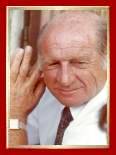
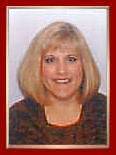
Future Visions of Castro Valley To open this up for community discussion, future "Visions of Cityhood" columns will cover some the following topics: ·How can incorporation benefit me?"Visions" columnists encourage Castro Valley residents to respond to these issues via editorial letters or on the http://www.c4cv.org bulletin board. About the columnists:Sal Tedesco is a 33 year resident of Castro Valley who was formerly MAC (Municipal Advisory Council) chairman, a city manager, and a federal grants manager. Marty Hoag is a four year resident of Castro Valley who is a communications consultant and public school teacher.
|

 n
this new column, guest writers will present historical fact-based information
for local voters to consider about the advantages of cityhood. This week's
column will examine: 1) Observations about democracy; 2) Local vs. county
government; and 3) The function and value of a locally elected city council.
n
this new column, guest writers will present historical fact-based information
for local voters to consider about the advantages of cityhood. This week's
column will examine: 1) Observations about democracy; 2) Local vs. county
government; and 3) The function and value of a locally elected city council.